Recently, I have read an article (here) about humor across cultures. I want to shortly share the information with you, because it relates with the topic of previous
lesson – culture dimensions (individualism/collectivism; low/high uncertainty avoidance; low/high power distance).
Joking is a
universal thing, isn't it? Jokes allow us to address taboo subjects in a
playful way. But on the other hand, the sense of humor and humor itself varies
between cultures.
I want to
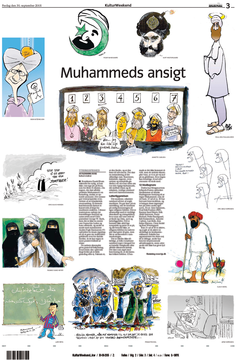
give a vivid example – in 2005 one of Danish newspapers posted cartoons about
the Prophet Muhammad. (here) Some of those cartoons offended Danish Imam, it
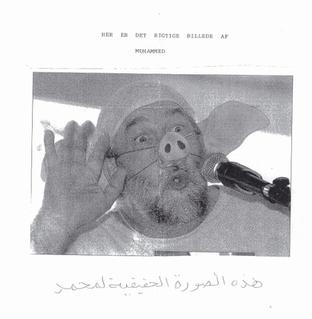
provoke indignation in parts of the Arab world. In a while another more
offensive cartoon (here) was added and falsely bond with the same newspaper. It
caused demonstrations in the Arab world with burning Danish flags (here). What in the
beginning was pure joke, ended with huge diplomatic trouble.
So is there
any way to know if and how to joke around people from different countries/cultures?
There kind of is, cultural dimensions can help us to deal with unpleasant
situations.
Individualism (low context) vs. collectivism (high context)
Edward Hall describes high-context cultures as those who communicate directly, non-verbally and implicitly. So low-context cultures communicate explicitly, verbally and directly.
The outcome
is that – individual culture will be the major joke producers, while
collectivism cultures will adopt more implicit and contextual ways of humor.
Low power distance vs. high power distance
In the
countries where power distance is high, people tend not to see themselves as leaders;
they live in a separate world. While in higher power distance cultures everyone
is perceived equally.
I would
conclude, that in higher power distance cultures it’s forbidden to joke about
leaders, dictators and so on, but it is not quite true.
Even if the
hierarchy is strict, people tend to joke about leaders. As it’s written in the
article, it is like healthy skepticism about their political system. The main
difference in particular culture dimension is that in countries with high power
distance you should be careful where and whom you tell the jokes.
Low uncertainty avoidance vs. high uncertainty avoidance
Cultures
with High uncertainty avoidance prefer formality and social norms are very
strict, so the humor should be the same – only allowed in the right place and
moment (and appropriate context). In the
same time cultures with high uncertainty would stay tolerant and calm whatever
happens.
If we talk
about Low uncertainty avoidance then those cultures prefer informal norms and behaviors
instead. It means that few jokes wouldn’t bother.
To conclude
everything joking can be risky if you deal with a culture of collectivism, large
power distance and high uncertainty avoidance, because there people are quick
to take offence at anything out of the norm.
In Latvia
As an example I can (of course) describe Latvian humor.
We are
individualists, and indeed we like to joke a lot – black humor, sarcasm, stereotypical jokes etc.
We live
more in dimension of low power distance, so we joke a lot about our president,
government and politicians; we even have a television show “Everything is OK in
our country”, where the main topics are always about the dumb things Latvian politicians have done.
We avoid uncertainty a lot, so before you make a joke in Latvia, it’s better to
think if it’s an appropriate moment and if we will catch the funny part of the
joke, otherwise dealing with an uncomfortable silence will be the outcome.
I hope I have
shown you that joking across cultures should be taken seriously, so don’t be
shy to share opinion about my blog and humor in your country.


No comments:
Post a Comment
Note: only a member of this blog may post a comment.