Saturday, 20 December 2014

Portuguese Identity

Hello my dear colleagues :) I have just one thing I'd like to share with you, that is relevant to our classes. :) 

For another class, Radio Journalism, I chose to make a final project, (which should have been a radio report for 7 - 10 minutes) about Portuguese identity. I asked six young people - three native Portuguese (two boys, one girl), two immigrants (one Brasilian guy as a representant of the biggest national minority here, and one Belgian girl) and one Erasmus student - to share their opinions about Portugal (Portuguese language, traditions, economy, politics, media,...) and Portuguese people (their behaviour, character, stereotypes about them, etc.) with me. I won't keep you in suspense any longer, four of my interviewees were our colleagues from Intercultural Communication classes - Joao, Ana Rita, Naomi and Andreas. :) 
I pity so much that I didn't manage to make the report earlier and show it to you during classes, because these interviews brought a lot of interesting points of view and we could have had such a nice discussion about it! :/ Well, I can't change this anymore, but because I really think that the answers I gained were very interesting and you could find them interesting as well, I decided to share my final report with you.So if you are really interested in it, you can find my report here http://leteckaposta.cz/519135213 
You just have to clik on this link and then click on the sentence "Portuguese_identity2.wav" and it will start downloading (I had to upload it somewhere because it was too big ;) ). And in case you are not, sorry for a spam :D

Otherwise I must say that I really enjoyed the classes and our blog, that brought so many diverse points of view! Thank you all for that! :) And thus I'd like to propose, if there is anyone who would like to continue in contributing to this blog even beyond classes with me, I would be happy for that :) It doesn't need to be strictly regular, but from time to time it's really nice to read something different, to know what is happening in other countries, what's the atmosphere, opinion on sth. and to hear it from somebody who really experiences it, not to read "official" information in media. I think I will miss the diversity in opinions when I come back home. Everything will be just the same Czech point of view :D So whoever has the same feeling as I do, let's stay in touch by continuing in our blog! :) And merry Christmas to you all!!! :)  

Friday, 12 December 2014

stereotypes

I found a video about the stereotypes that I think is interesting to see. And I want to share with you. It is about the contrary situation that normal happens with white and black people.

And the other thing than I found it is one site that it show us one book about the gender stereotypes

UAlg VS USC

Como estudante actual em Portugal gostaría de comparar o sistema universitario em Faro e em Santiago de Compostela.

Dende que cheguei no meu primeiro día nas aulas no campus da Penha já deu para percever as grandes diferenças que tem.
1) No primeiro o tipo de aulas, já que são pequenas, com mesas individuais e nas que como maximo so 20 alunos podem estar lá.Em Santiago as aulas são enormes com mesas como minimo para 5 pessoas.
2) O numero de alunos por aula. Em Faro a aula na que tem mais pessoas somos 30, mais em Santiago somos 120 alunos dum so curso, o que sería quase juntando os 3 cursos duma licenciatura aqui.
3) Os profesores. Aqui os professores são muito diferentes de lá. Para começar todos são muito cercanos aos alunos (nesto pode que influencie o numero de alunos na aula), podes encontrar com eles em qualquer hora do dia na faculdade e sempre estão disponiveis para atenderte. Em Santiago os profesores nem conhecen teu nome, e muito complicado encontrar com eles na faculdade, pelo que sempre e melhor enviar um email previo para confirmar que horas el vai estar disponivel para atender e quando o fan sempre tenhem prisa e precisam acabar depressa o encontro com você porque sempre tenhem outras coisas melhor que fazer segum eles.
4) Os recursos que podes utilizar. Aqui é muito fazil pode pegar emprestado qualquer material da universidade durante diversos días e para empregar para trabalhos da aula. Em Santiago, nem tenhem tanto material nem e tão fazil que o emprestem, sempre precisas de um professor que se faza cargo.
5)As materias aqui não são muito complicadas. Tambem pode ser porque as materias que tenho podem ser mais faciles ou adaptadas para erasmus por a lingua. Mas comparado com Santiago não se da tanta materia, lá os profesores gostam muito de dar muito temario sem se preocupar se os alunos estam a aprender alguma coisa e so se interesan em evaluar a prova escrita final, sem ter moi em conta o trabalho de aula.
6) O prezo do comedor universitario. Isto foi uma das coisas que mais me impresionou, como por 2,5€ pode comer tanto. Lá, custa 5,4€ e você so come um prato.

Istas são as principais diferenzas que eu encontrei entre as duas universidades e que achei interesantes de compartilhar.

Thursday, 11 December 2014

Stereotypes about Portugal and Portuguese people


I always  been curious about  the stereotypes of Portgual and portuguese people, so I search for them in the internet and found several, here's  some of them :
“ Portuguese women have mustache”
I was already aware of this stereotype  about Portuguese women, and I must say that is not true!! Portuguese women (at least most) dont  have mustache !!

“Portuguese people are considered more taciturn and fatalistic than other southern European populations, probably because of Fado music (fado means “fate”)”
It is true, Portuguese tend to think only about the negative things  and are more taciturno. We complain, a lot ,about everything and everyone.

“People from Alentejo (one of the most rural and underdeveloped regions in the country) live life at a snail’s pace, are lazy and mostly old. They’re probably communists too.”
It's funny to find this stereotype about Alentejo and it´s people, because in Portugal  we also have this stereotype about this region of our country and it´s people. Like some Nordic countries in Europe see the southern countries as lazy, we (portugueses) also do that with Alentejo and it´s people.
On the question of being mostly old  people that live in Alentejo,  I can say that is true, Alentejo  like any  other inland regions of Portugal suffers from desertification,   younger people tend to go to coastal areas to find a better live and employment. About the part  that says that people from Alentejo are mostly communists,  well Alentejo is  one of  the areas of Portugal where Communist party have more fans, but it doesn´t  mean that they are all communists.

“(…) cultural habit to make an afternoon nap”
In Portugal we don´t have the habit of napping, unless  if you are child. In fact we associate this stereotype with Spain´, but I don´t know if it is true or not  . It's one of the cases where the Spanish and Portuguese cultures are confused.

“The Portuguese language even has a word, “saudade”, which doesn’t translate into English. It roughly means “nostalgia” or “homesickness”
It´s true  like any other languages portuguese language  also has a word that can not be translated ,the word  is "saudade”, as the phrase  said it can be translated as" nostalgia "or" homesickness "but it's much more than that.


In my sources  you can find  more stereotypes about Portugal and the Portugueses and also about  other European countries and perphaps about your own country:
http://www.nationalstereotype.com/european-stereotypes/
http://www.nationalstereotype.com/portuguese-stereotypes/

About Identities

1.Gender identity: 
Gender refers to the social expectations about how boys and girls should think and act. It is the biological , social and legal status that identifies us as men and women. Gender identity refers to how we feel about our gender and our gender roles and how to communicate those feelings trough the clothes, behavior and appearance. I think that's more important how do you feel than how are you, in biological sense, I mean that, you have to follow your owns instincts because the gender identity only exists by the society. It's a concept created by our own past society. For long years ago, society says to us how must be in our lives; How we have to be, how we have to wear, what kinds of activities we must do, etc. depending if we're from one gender or other.
For example in topics like esthetic, fashion, etc. gender identity, has a hard influyent component; "You can't have hairs in your legs, it's not for a lady". This is a "stupid" example that most girls add in our mind uncounsciously, and like this, thousand of examples.

Feminine traits are ways of behaving that our culture generally associated with being a girl or a woman. Male traits are ways of behaving that our culture generally associated with being a boy or a man.

There are some terms that used to describe usually the Femininity:
 Dependent, Passive, Emotional, Sensitive, Quiet Full of grace, Innocent,
Weak, Sexually, Suggestive and Educated. 

There are some terms too that used to describe the Masculinity: 
No emotional, Independent, Competitive, uncoordinated, Experienced, Aggressive, Insensitive Active Strong , Confident, Sexually Aggressive, hard. 

All men have traits considered feminine and every woman has traits considered masculine. We can also show differents characteristics at differents times. 
The cultures teach that men and women are opposites in many ways. The
 truth is that we have more similarities than differences.
 
2.   Sexual Identity: 
Sexual identity refers to how people perceive and identify themselves as 
sexual beings, whether a man, a woman or a mixture of both. Sexual identity 
beggins at conception when the male or female biological sex is defined.
After birth, sexual identity is built and modeled, depending on many factors,
 including the relationship with the mother, father and / or both, family, school, / as friends / as, media and social and cultural environment in which they live. 
All these factors will influence how learning to be women and men and girls 
and boys receive different messages transmitted that is feminine and
 masculine. This does not necessarily have to do with biological functions, but yes about the ideas and values ​​of our culture.
In my opinion, in Sexual identity as Gender identity it's more important the 
way that you feel with your self that the way that other people see you. 
 
3.   Age identity
About the ade identity I think it's an aspect very important to considerate.
I think it's the main aspect that you have to achieve more or less. I'm not saying that if you feel young you probabbly will live better and feel inside's better, what I've to say is that you have to live your life according your age more or less; You can have some aspects that you considerate as yourself differents, but you should to achieve with some things according your age, for example, if you are a parent, you must be a parent and do the functions of a parent, you can't avoid your responsabilities as a parent and live like a teenager because if you have some principles you probabbly feel bad. I think the same, for example, with the teenager people; If you had 13 years old an live like if you were 18, probabbly in the future you'll feel tired to do the same things a lot of years and don't feel like a girl with 18. Like these, a lot of examples. 
4.   Racial/ ethnical identity: 
I think that racial and ethnical identity are some constructions of the society. The society put "names" to the colors of our skins and considerated that some colors were strongers than others and vice versa, so, in my opinion is sad that in this century exists racist people or people that hates for example gypsis; Probablly if we have more human contacts between us we will be more tolerants and these "separations" will disappears. 
 
5.   Regions/ nacional identity

National identity is a social, cultural and spatial condition; These are 
features that have a relationship with a policy environment and that, 
generally, the nations are associated with a state. 
In some cases, national identity can exist without being certified by a legal
 document. For exemple, gypsies can talk about national identity despite his 
nation does not have a territory or state that as a social group for protection. A man, therefore, can have Spanish nationality or any other country and Gypsy 
identity. 
I think that is simply that you born in some place, but...If you were born in other place? I think nacional identity doesn't exists, I mean, I love Seville, my city, and my country, Spain,but it's simply coincidence. Sometimes, nacionals identitys of ourselves create a lot of prejudices and it's the point that I don't like. If we can live with our national identity without discriminate other people for the only reason that they belong to another place it doesn't mind but, unfortunatelly 
some people have very close mind and they aren't ables to live in peace with 
other nations or cultures. I think we're in the XXI's century and it's very sad that today we've to permit this kind of actitudes and thoughts. 
 
 
6.   Religion identity
The religion identity is the feeling to belonging in some religion, for example 
the cristhyanism, the judaism or islamism. I think it depends by the own self, I
 mean, if you believe in something, you have faith, it's allright, it's respectable. But, in my personal opinion I think it depends a lot in the place where do you born and the kind of education that you receives; For example, if you born in a catholic country and your parents believe in god and teach you since
 you born the catholics principles you probbably will believe in god and will be 
catholic. Sometimes it's not happens by the same way, but, it's very ussual. 
I think that school has a lot of influences too, because we spent a lot of time 
there and we forges our mains knows and ideas. 

7.   Class identity 
I think that it's not important to have humans relations, but, unfortunatelly for some people it has a lot of weight at time to have relations of any type: 
Friends, work, neighbours,etc. Some people thinks that have to take care this "reputation". In my personal opinion, it's very sad. I think humans first of 
all are humans, so, Why don't have relations with each people that we meet? I mean, if you talk some time with a nice person why do you should stop? Because he or she hasn't got money? It's an stupid thought, but a lot of
 rich people have it; Other no, of course, but it still exists, So like all these topics, Class identity exists since the human exists and it create a lot of prejudices. Since here I invite to you to know all people and then make your own oppinion :)

Why so many portuguese love lottery scratch – off tickets?


From the first months since I live in Faro, I noticed one interesting portuguese hobby, entertainment, amusement, don’t know how exactly to call it, maybe addiction, but it suprised me anyway. And what it is exactly? Their great thirst to buy scratch cards!

Every month I am going to these small shops to recharge my phone card and every time I see a large lines with people, who are buying these lottery scratch – off tickets. I have that strange feeling that every time I am the only one, who don’t buy these cards.  People are standing inside and outside with these tickets, which ask to scratch off at least three different areas on the card  that could be hiding different things such as numbers, shapes and symbols. I think these type of lottery are much more addictive than having to buy an actual ticket lottery, because addiction is primarly based on the fact that don’t have to wait long at all.  

But I can not understand why it is like that? Why are these cards so addictive to portuguese and others?  Is there a really big possibility to win several hundreds, thousands simply by scratching off the right areas? Are they really waiting for a luck or just don’t have nothing to do? I can not understand... but there are always a lot of people  in these shops – young, old, women, men...

In Latvia mosthly elderly people buy scratch tickets, although a couple of times my family has also tried, but just to try, but for us it was just a fun, and nowdays in my country it is not so popular, but of course still we have „players”, but certainly not as many as here. Maybe here is a bigger chance to win, I really don’t know, what is their secret to play so often J


Stereotypes about my city

In the 5th and 6th lessons, we did some presentations of some works; Individual Works.  In my case, I did a work talking about Seville, my city. I chose this topic because we had to talk about our identity building or for topics talked in lessons like stereotypes, prejudices, etc.
 I thought that it was a fantastic idea, because Seville it’s a city full of stereotypes about easter, Bulls, “flamenco”, our dresses, our weather, our parties, etc.
I try to shown this as well as possible. I put some videos showing the principal parties: “Easter” and “April’s Feria”.  I felt very happy with the reactions of my classmates, because they didn’t surprised me; They saw this like something strange or inussual, it was a cultural crash, and I liked it, because I understood that they can perceived this in a different way from us.
I found a lot of things to talk about it and I really enjoyed doing my work.
When I was doing it, I really missed my city and I realised that’s very wonderfull city to live and to stay for a period of time. It’s awesome, under my point of view in many aspects.
I think that the stereotypes are true, but in perspective, I mean that, some people achieve these clichés, but, like all, not all people are equal.
With my work, I wanted to transmite that there are a lot of stereotypes that we  achieve, but, there are people that are different and live in their own way and people to are totally opposite of these kinds of stereotypes.
 I tried to show Seville about the outside’s point of view, I mean, I tried to show Seville by the way that I maybe show a tourist person.


O que levo de Portugal...

No meu último mês em Portugal começo a sentir uma certa nostalgia, uma vontade de ficar, um apego que essa cidade de Faro deixou e que não consigo me desvincilhar. Faro é uma pequena cidade, com prédios baixos, calma, que durante a noite não se houve nada, apenas os gatos pelas ruas. Seu clima quente no verão deixa tudo ainda mais bonito, talvez apenas eu ache isso.

Posso dizer que tenho três principais lições a levar de Faro: a primeira é a calma, a paciência e a lição de vida que os farenses me dão todos os dias ao acordar de manhã cedo e levar a vida de maneira leve e pacata, sem muitas preocupações, sempre pensando em viver o hoje.

A segunda lição é o desapego. Durante um intercâmbio a noção de desapego fica muito maior, pois nós deixamos tudo para trás para viver uma nova vida, com novas pessoas, novas amizades, uma nova família. Quando formos embora não será diferente: deixaremos muita coisa que foi construída nesse tempo para trás. Meu apartamento, minhas amigas, meus amores...

A terceira e não menos importante é o espírito de solidariedade que os portugueses tem. Cheguei aqui reclamando muito dos meus colegas de turma que não queriam fazer trabalho comigo. Mas hoje, conhecendo melhor eles, percebo que eles sempre estão querendo ajudar, buscando o melhor para o próximo, olhando para o outro como olha para si.

Sim Portugal, sentirei saudades. Mas espero em um futuro próximo poder te chamar de minha também.

O choque cultural

O choque cultural pode se dar através de vários motivos: sobrecarga afetiva e ansiedade, solavancos comportamentais e conflitos, desorientação e incerteza, desajustamentos na descodificação e sentimentos, ou todos juntos.

Quando chegamos a um novo país, com cultura diferente, temos quatro momentos: A euforia, o choque cultural, a aculturação e a estabilidade. Quanto maior for a diferença cultural maior será o tempo entre choque cultural e aculturação.

A euforia é o momento onde ocorre a minimização dos problemas. No meu caso, as duas primeiras semanas foram de euforia. Apesar de ter que procurar um apartamento, eu estava muito tranquila e querendo aproveitar tudo. Ia todos os dias para a praia e fiz muitas amizades nesse período.

O choque cultural é o momento da incompreensão do isolamento. Nesse momento, no meu caso, eu ainda não tinha um grupo fechado de amizades e por vezes me sentia excluída de outras pessoas. Contudo, o momento de choque passou rápido, pois fiz amizade com a menina que mora comigo.

Acredito estar vivendo agora o momento a aculturação, apesar de já se passar 4 meses da minha chegada. Eu continuo aprendendo muito com Portugal, todos os dias. E a estabilidade anda junto, nos momentos em que tenho que mudar e negociar em certas situações que seriam diferentes no Brasil.

Iceberg's metaphor

In this past lesson, Catherine, our teacher explained to us the Iceberg's metaphor, she told us that it means when you analise your own country in three parts:

At first you have to define your country by some topics like: Fashion, institutions, gastronomy, lenguage (verbal and no verbal), etc.
At second, you have to do your owns interpretations and meanings about it and to end the metaphor you have to analise or compare the basics and universals humans necessities.

She was tolding us too about the cultural collision with other cultures when you travel to other country different as yours. It's part from acculturation: Process of receiving another culture and adaptation to it , especially with loss of culture.
We're talking about too about the cultural identity: The personal identity; That is everything that defines us as individuals and about the etnial identity; that is our identity relationed with some etnia, for example gipsy etnia.

When we have more or less this concepts affixed we started to worked in a very interesting activity: We had to write our own iceberg talking about our countries; We had to put the cultural aspects that we see about, in my case, Spain and then a classmate comming from other country had to seach about its origins (the part that we can't see). With this excercise we can see the origins about our costumes or topics. It was really interesting, because I learned a lot of things that I didn't know.

In my work, I talk about Catholicism and their parties, our timetable of life, regionals parties, homeless people, night parties, bar's lovers and “siesta” (sleep for 15 or 20 minutes after the luch). My classmate from Belgium searched about this seen aspects and I learned a lot of things that I didn't know before do the activity.

It was interesting because I had to search too about Belgium's life and I learned a lot of things of this country (for me until this moment unknown) and not that's all, I had the chance to learn about its origins, it's more interesting too under my point of view.

I learned that it's the country where borned the beer, the comics and the fried chips. I really like this activity. 

My first days in Faro

I arrived to Faro the 31st of August. I've to say that I was disinclined to it, because my summer it was very funny and I wanted to be continued and sharing with my family and friends, so I've to did an effort to came here. When I arrived, I didn't know anything about the city, so I rent a flat in a very far place; It was unfortunate, because I've to move by meself alone all time and I didn't like too much the place where I was living, it was near a gipsy community that they don't inspirate to me too much confidence.

Anyway, I was used to live there by the time, but not too much time, because I moved because a problem with my pet: Bárbara; My new flatmate was allergic to cats, so the first week, I decided to move to “Avenida 5 de Outubro” with two other news flatmates.
I've to say that firsts days here were wonderfuls, I knew a lot of people via Facebook and then meeting with them. All of us were in the same situation, so was easy do colleges and with the time sure true friends. I knew a lot of people in Gambela's presentation and in the Erasmus dinner.

About the culture, I've to say that under my point of view, Spain and Portugal has the same cultural, of course we have some differents things in the way of life but, in general, is the same; The same weather, the same food (mediterranean diet), the same parties (well, in Spain there are more parties)... If i have to stand out some difference it can be the timetable: We do things later than portuguese people; For example, we ussually eat at 14:30 or 15:00 and have dinner at 21:30 or 22:00; For portuguese people it's not normal, they eat very early and have dinner at the same; I was really surprised when I knew this, because I thought that we've the exactly same timetable, but, anyway, for me it's not a problem, because I'm following my spanish timetable.

I think that it will be an awesome year full of a lot of surprises and changes in general. I think it's a maturity year,and a chance to change when you will walk around people a lot of times, but sometimes you will have to walk alone wihout your parents help. I think it's a magnific opportunity to know yourself as never you did before.


Minhas competências interculturais

Durante os poucos 3 meses de aulas teórico/práticas que tive em Comunicação Intercultural pude aprender alguns conceitos e acrescentar algumas experiências ao meu portfólio de vida. Partir de casos e mostrar algumas situações de relações interculturais foi extremamente importante para que enxergássemos as dificuldades que uma pessoa que não sabe a língua local e universal (inglês) tem ao se comunicar. Um exemplo foi de uma colega de classe da Turquia. Infelizmente ela não conseguiu continuar na cadeira por, provavelmente, não entender uma palavra do que era dito em classe. Tenho certeza de que não foi a única cadeira de que desistiu, pois essa ainda era dada em inglês. Com esse exemplo pudemos observar que, apesar de existir a comunicação não-verbal, quando trata-se de viver e estudar em um país diferente é impossível se comunicar apenas com gestos. Além de tudo, para a nossa colega fica muito mais difícil ter relações extra-classe, pois fazer amizades também demanda um mínimo de comunicação verbal.

A comunicação intercultural é uma ciência nova que busca entender e estudar as relações entre diferentes culturas ou entre homens e mulheres, por exemplo. Leva em consideração a mobilidade, o contexto multicultural, a globalização, a economia, a migração, os problemas socioculturais. Uma competência intercultural seria a interação com diferentes culturas, o intercâmbio, a reciprocidade, o respeito, a negociação, ter solidariedade com atitudes aos diversos tipos de sexos, idades, religiões, etc.

O exercício do Mapa Conceitual foi de extrema importância para entendermos que cada aluno, cada ser humano, pensa de acordo com sua bagagem cultural. Por exemplo, meu mapa conceitual foi sobre a família, nele eu descrevi uma família tradicional (pai, mãe, filhos), contudo durante a aula fui questionada sobre os outros tipos de família que existem hoje em dia (pai, pai, filhos ou mãe, mãe, sem filhos, entre muitos outros). Nosso pensamento inicial é muito ligado aos nossos valores, que aprendemos durante toda nossa vida, na escola, com nossos pais, com amigos e pessoas próximas. Isso influencia nosso conceito sobre qualquer coisa que pensarmos. Exemplo disso, quando a professora pediu para que eu escrevesse o que me vinha a cabeça sobre Portugal, a maioria eram esteriótipos que a maior parte dos brasileiros que não conhecem Portugal têm: Azulejos, bigode, bacalhau, Cristiano Ronaldo, entre outros.


Em outra aula falamos sobre cultura e choque cultural. A cultura faz referência aos hábitos, aos pressupostos, aos comportamentos, as interpretações, as tradições e muitos outros. Para tratar de cultura não podemos deixar de falar sobre a Metáfora do Iceberg. Esse metáfora diz que a parte visível de algo é muito pequena se comparada a parte não visível, como em um iceberg. Na cultura a parte visível do iceberg seriam os artefatos, ou seja, a moda, as instituições, a gastronomia, entre outros. Já a parte não visível são: a linguagem (verbal ou não verbal), as interpretações e significados, e as necessidades básicas universais humanas.

Wednesday, 10 December 2014

Talking about stereotypes

Stereotypes are, as you know,  a generalization of a behavior or attitude given to a individual or a social group.  incentivated and developed by the media, specially by television. They are given to a society in very diferent ways. In  my country, Portugal, the most awaring stereotypes are racial/etnic and sexual stereotypes,  in my opinion. On the first as in so many countries slavery contributed to discriminate the black people. And gipsians are still seen not very well in the society. Those aspects must change don´t you think? But change depends on the review of mentalities and behaviours that we, society, adopt in our lifes. I felt bad when in another day our colegue Daira presented us a work about racism, when she showned us a vídeo that a black child felt sorry about being different from a white doll. Differences must be celebrated and respected in every corners of the world, not discriminated. And we learn that due to our intercultural competence. To become a better person! 

How I express my identities…


We express our identities in everything we do, we just don´t realise that because we do it unconsciously. So I asked myself  "When and How I express my identities?". I conclude that express them when I speak, because when do it I express my cultural identities (national/regional/personal…); when I give my opinion in some matter,  because I´m expressing my  values and ideals ( a big part  of my identity); in the way that I relate/ communicate with others and how I accept their opinions and differences; in my personal tastes (musical, literary ...); and even in the smallest things, like the way I dress. These were just some examples, probably the most obvious ones, in which I´m aware that I´m expressing my identities, but I´m sure that I do it in many more ways I just don´t realise that I´m doing it .

Ser portuguesa


Entristece-me ouvir dizer que “Portugal já não é o que era”, vindo de mentes abaladas pela crise económica que continua a abalar o País. A crise tem este poder, questionar os valores com os quais sempre nos identificámos, e vemos serem esquecidos. Ser portuguesa é especial. É sentir um arrepio ao ouvir o hino, sentir uma melancolia gigante quando oiço histórias dos meus antepassados, que, ao contrário da geração do presente, lutaram, com ânimo e garra, para construir a nossa identidade. Admiro quem sai de Portugal, na esperança de melhores condições. Porque, por mais condições que um País possa oferecer, nada substitui o que nos liga a uma cultura. Acredito que uma parte da pessoa morre quando abandona o País em que nasceu. As saudades vão sustentando as memórias, que cada vez vão sendo mais longínquas. A distância vai apagando aquilo que nos marca. De forma consciente (ou não), ligamo-nos emocionalmente aos caminhos que percorremos, aos cheiros, às pessoas, às tradições. E se não tivesse nascido em Portugal, não seria a mesma pessoa. Diz-me em que sítio nasceste, dir-te-ei quem és!

Joana Teixeira, nº49393

Sunday, 7 December 2014

In what ways we express our different identities?

I think that everyday we express our identity in very different ways. In the way we eat, the way we dress even the way we behave, it all matters when we talk about our identity.  My way of eat is different from the way that a chinese guy in the other part of the world eats, because i use fork and knife and he uses sticks, for example. Also the way i dress everyday is different from another person. My sense of fashion is instituted by what i see and what i like, depending only of my free will. The language that i speak is part of me as well. My cultural identity is seen through my knoledge, my origins, my language and the way i act before situations.

From childhood we learn by our parents the values and the lessons that in the future are like a guide to the right path where our identity is. Those values are very helpful to respect, in my opinion, other cultures. In my everyday i respect other etnic minorities and people of the same sex who like each other because i know that those people are equal to me. Now have I total respect? No. I cannot respect some atitudes our behaviours that a culture could have. I talk specificaly, about acts of terrorism. Those acts made to please a God. Although i have religious tolerance.
My own identity  differs also  in what i think of myself and what the others think of me. These two are a very different perspectives. It is proved ,scientificaly, that what we think is a more negative perspective than the one that the others have from us.  And thats true i think. Sometimes when we don´t care about us we need to search people, either friends or family to bring us up and to give us strenght to deal our everyday.


Saying that, what are some ways in which you express your identities?

Thursday, 4 December 2014

A joke is a very serious thing /Winston Churchill/

Recently, I have read an article (here) about humor across cultures. I want to shortly share the information with you, because it relates with the topic of previous lesson – culture dimensions (individualism/collectivism; low/high uncertainty avoidance; low/high power distance).

Joking is a universal thing, isn't it? Jokes allow us to address taboo subjects in a playful way. But on the other hand, the sense of humor and humor itself varies between cultures.

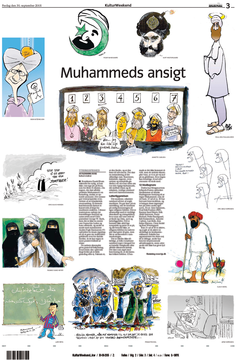
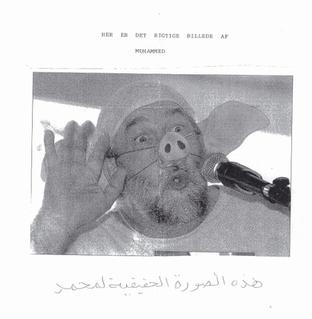
I want to give a vivid example – in 2005 one of Danish newspapers posted cartoons about the Prophet Muhammad. (here) Some of those cartoons offended Danish Imam, it provoke indignation in parts of the Arab world. In a while another more offensive cartoon (here) was added and falsely bond with the same newspaper. It caused demonstrations in the Arab world with burning Danish flags (here). What in the beginning was pure joke, ended with huge diplomatic trouble.

So is there any way to know if and how to joke around people from different countries/cultures? There kind of is, cultural dimensions can help us to deal with unpleasant situations.


Individualism (low context) vs. collectivism (high context)


Edward Hall describes high-context cultures as those who communicate directly, non-verbally and implicitly. So low-context cultures communicate explicitly, verbally and directly.
The outcome is that – individual culture will be the major joke producers, while collectivism cultures will adopt more implicit and contextual ways of humor.

Low power distance vs. high power distance


In the countries where power distance is high, people tend not to see themselves as leaders; they live in a separate world. While in higher power distance cultures everyone is perceived equally.
I would conclude, that in higher power distance cultures it’s forbidden to joke about leaders, dictators and so on, but it is not quite true.
Even if the hierarchy is strict, people tend to joke about leaders. As it’s written in the article, it is like healthy skepticism about their political system. The main difference in particular culture dimension is that in countries with high power distance you should be careful where and whom you tell the jokes.


Low uncertainty avoidance vs. high uncertainty avoidance


Cultures with High uncertainty avoidance prefer formality and social norms are very strict, so the humor should be the same – only allowed in the right place and moment (and appropriate context).  In the same time cultures with high uncertainty would stay tolerant and calm whatever happens.
If we talk about Low uncertainty avoidance then those cultures prefer informal norms and behaviors instead. It means that few jokes wouldn’t bother.


To conclude everything joking can be risky if you deal with a culture of collectivism, large power distance and high uncertainty avoidance, because there people are quick to take offence at anything out of the norm.

In Latvia


As an example I can (of course) describe Latvian humor.
We are individualists, and indeed we like to joke a lot – black humor, sarcasm, stereotypical jokes etc.

We live more in dimension of low power distance, so we joke a lot about our president, government and politicians; we even have a television show “Everything is OK in our country”, where the main topics are always about the dumb things Latvian politicians have done.

We avoid uncertainty a lot, so before you make a joke in Latvia, it’s better to think if it’s an appropriate moment and if we will catch the funny part of the joke, otherwise dealing with an uncomfortable silence will be the outcome.


I hope I have shown you that joking across cultures should be taken seriously, so don’t be shy to share opinion about my blog and humor in your country. 

Wednesday, 3 December 2014

Gypsies - their behaviour and lifestyle!

Two weeks ago during the classes we were discussing about gypsies and it was interesting to hear other nationalities opinions about gypsies lifestyle! And, in that moment, I realized that they are so different from other society, that I should check  more and look what mother „Google” says about them and their behaviour and I figure it out that It’s interesting enough to share with you! :) 

And what I understood ?
The first, kids only attend public school until age 10 or 11, we already discussed about their view about education system, but still... for me it is more than strange that they believe that it is enough, I think right now it's so much easier to understand why they are not able to integrate in our society, but if they are happy with that... but noo, still too strange for me!

Also I realized that family in gypsies life is very important, they have strong connection, for example, new couples live with the husband’s parents for at least the first year or two or until the first child is born. For Latvia It’s never like that, if we have serious relationships we want to move out from parents place as soon as possible :D And interesting that whenever there’s a major event, such as wedding or funeral, all family members come together and sometimes theres hundreds or even thousands of people. In my country we are trying to make it more private and sometimes we invite just our closest family members and friends and that's totally enough :) I think if there would be thousands of family members then, first of all it’s too expensive and and ,the second, less privacy and I consider it’s impossible to remember all family members anyway, so there is no point to invite all of them :)

Also I found out that gypsies, over the centuries, tended to work at occupations they could perform independently, some of these jobs included metalworking, woodworking, horse trading, many of them were animal trainers and showpeople. And I was shocked to hear that gypsies worldwide are famed for their singing, dancing and musical skills, because in Latvia I thought their biggest business is to steal and trying to sell bad quality things. It’s funny that sometimes they are trying to get money by acting that they have some „magic power” and they can see your fucture, when you will get married, how many kids you will have and bla bla blaa and If you are not interesed to hear your „fucture” and pay for that, then, of course, you will get curse! (because they have this „magic power”)

In general, in my country we don’t have so many gypsies comparing other countries  as Czech Republic or Portugal,  but we like to makejokes about them anyway,  for example, that  „gypsies probably will try to sell you YOUR stolen bike :D (they stole and after that trying to sell you again) And what about other countries? You still have some expressions or phrases? It would be interesting to hear :)

And at the end I want to say that, even if gypsies are soo different from us, with different thoughts and opinions about life, we should respect their decision anyway, because it's their mentality and, as we can see they have very strong culture identity, what is suprising and quite impressive! 

We all have different thoughts when we hear a word "Gypsy" and it would be nice to hear your opinions and/or experience with them, because unfortantelty in that Friday we were just a few people, who exchanged with thoughts, so It would be interesting to hear your stories, because I think in every country gypsies act different :)